Kabutocho Dictionary
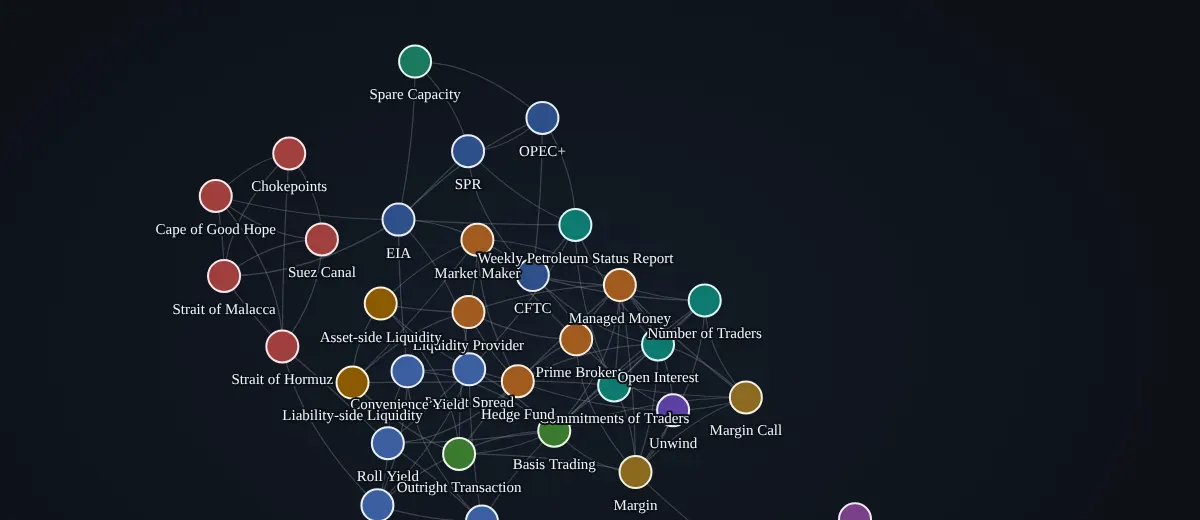 Mind MapExplore how the concepts connect, like a map.
Open the Mind Map →
Recently Updated
- Unwindアンワインド2026-10-20
- Basis Tradingベーシス取引2026-10-16
- Outright Transactionアウトライト取引2026-10-08
- Open Interest取組高2026-10-06
- Commitments of Traders (COT)コミットメンツ・オブ・トレーダーズ(COT)レポート2026-10-05
- Managed Moneyマネージドマネー2026-10-02
- CFTC米商品先物取引委員会2026-10-01
- Convenience Yield利便性利回り(コンビニエンス・イールド)2026-09-30
Most Read
Statistics are being prepared.
Hidden Gems
A rotating selection of less-read terms.
- Cape of Good Hope喜望峰
- Basis Tradingベーシス取引
- Hedge Fundヘッジファンド
- Commitments of Traders (COT)コミットメンツ・オブ・トレーダーズ(COT)レポート
- Contango順ザヤ
On Concept Origin Classification
The Kabutocho Dictionary classifies each concept by its Origin. Within the body text, however, we combine academic papers, institutional records, regulatory materials, exchange documentation, market practice, and practitioner insight as appropriate to support understanding and verification. A citation is treated as supporting evidence for the explanation, not as an indicator of the concept's origin.
Academic Origin
Concepts formed through academic research and theoretical frameworks, systematized and developed through peer-reviewed papers and textbooks. These form the foundation of financial economics and finance theory.
Examples: CAPM, Optimal Hedge Ratio, Modern Portfolio Theory, Convenience Yield, Cost of Carry
Examples: CAPM, Optimal Hedge Ratio, Modern Portfolio Theory, Convenience Yield, Cost of Carry
Market Practitioner Term
Terms that originated on trading desks and in market practice, later becoming widely used by exchanges, regulators, and academic research as well. These reflect market participants' practice and have become established in institutional frameworks and analysis alike.
Examples: Outright Transaction, Spreading, Open Interest, Roll Yield, Prompt Spread
Examples: Outright Transaction, Spreading, Open Interest, Roll Yield, Prompt Spread
Practitioner-derived
Concepts and frameworks arising from the experience of specific market participants or practitioners. While not necessarily standardized academic terms, they systematize practical observation and rules of thumb, and are used in practical analysis and decision-making.
Examples: Liability-side Liquidity, Dealer Positioning, Flow-driven Liquidity, Balance Sheet Capacity
Examples: Liability-side Liquidity, Dealer Positioning, Flow-driven Liquidity, Balance Sheet Capacity
Institutional / Regulatory Framework
Institutions, classifications, and frameworks built by governments, regulators, international organizations, and industry bodies for market operation, oversight, and statistics.
Examples: CFTC, EIA, the COT Report, OPEC (as an organization), the SPAN system
Examples: CFTC, EIA, the COT Report, OPEC (as an organization), the SPAN system